This post contains affiliate links; I may earn a commission from qualifying purchases.
PROCEED WITH CAUTION
NO GLUTEN-FREE LABEL FOUND
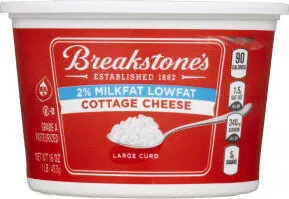
For those navigating a strict Celiac diet, understanding the exact allergen profile of Breakstone's 2% Lowfat Large Curd Cottage Cheese is crucial. Our comprehensive database scan provides the bottom line below. You should proceed with caution with this product. While no direct gluten ingredients were found on the label, no gluten-free claim is made by the manufacturer. This lack of transparency introduces a potential risk for cross-contact, which may be unsafe for strict Celiacs.
Cultured Pasteurized Skim Milk And Cream, Tapioca Starch, Salt, Vitamin A Palmitate.
Gluten Risk Other Allergen
Common Questions & Celiac Safety
What is the safest way to enjoy Breakstone's 2% Lowfat Large Curd Cottage Cheese?
If you are not Celiac, you can likely enjoy it. If you are Celiac, search our database for a 'Verified Safe' version of Breakstone's 2% Lowfat Large Curd Cottage Cheese.
Why isn't Breakstone's 2% Lowfat Large Curd Cottage Cheese in the Green Tier?
To reach the Green Tier, a product must have an explicit 'Gluten-Free' claim. Breakstone's 2% Lowfat Large Curd Cottage Cheese currently lacks this verified status.
What starch is used in Breakstone's 2% Lowfat Large Curd Cottage Cheese?
Our scan shows the starch in Breakstone's 2% Lowfat Large Curd Cottage Cheese is not specified as grain-based, but its exact source is unverified.
Is Breakstone's 2% Lowfat Large Curd Cottage Cheese safe for someone with silent Celiac?
Because silent Celiacs still suffer internal damage, we recommend sticking to verified GF products over Caution items like Breakstone's 2% Lowfat Large Curd Cottage Cheese.
Does Breakstone's 2% Lowfat Large Curd Cottage Cheese list any 'May Contain' warnings?
Many items in the Dairy & Alternatives section use advisory labels. You should check the physical package of Breakstone's 2% Lowfat Large Curd Cottage Cheese for these warnings.
GlutenSense Verification Methodology
GlutenSense uses a clinical-first cross-reference engine, unifying real-time data from Open Food Facts and the USDA Branded Foods database. Every product undergoes a 90-day safety audit to ensure analysis remains current with manufacturer changes and production facility updates.